
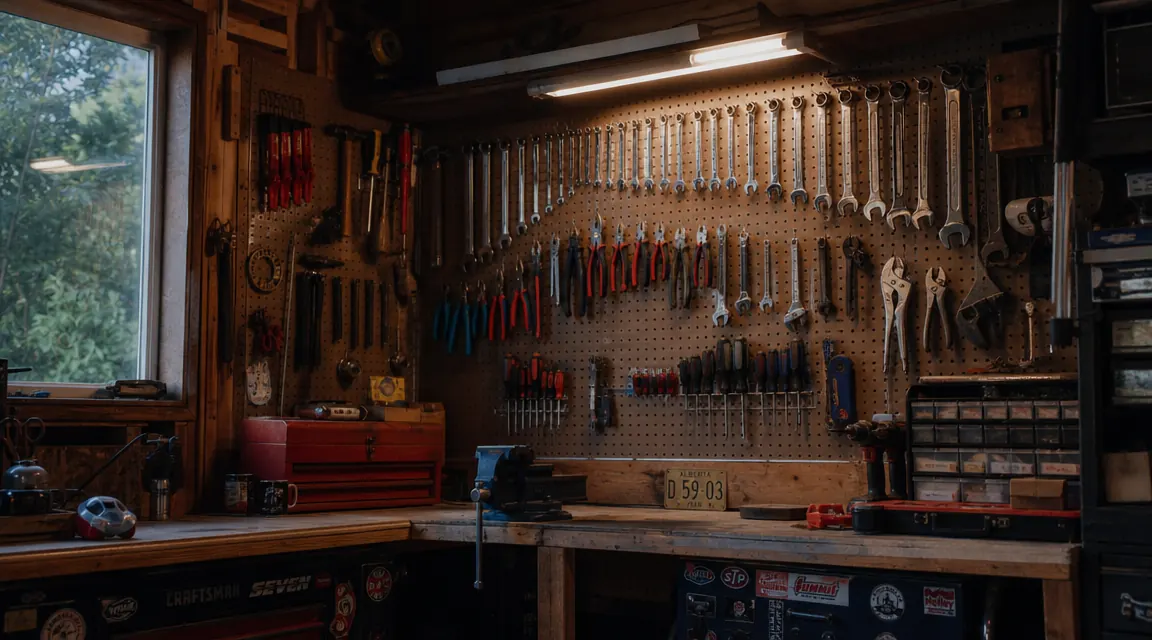
Short answer: Wall Control metal pegboard wins for a garage tool wall, and it's not particularly close. But slatwall is not a bad product. It just solves a different problem, and if you're buying it for garage tool storage because you saw it at a home improvement store and it looked heavy-duty, I'd like to save you a significant amount and a frustrating Saturday afternoon.
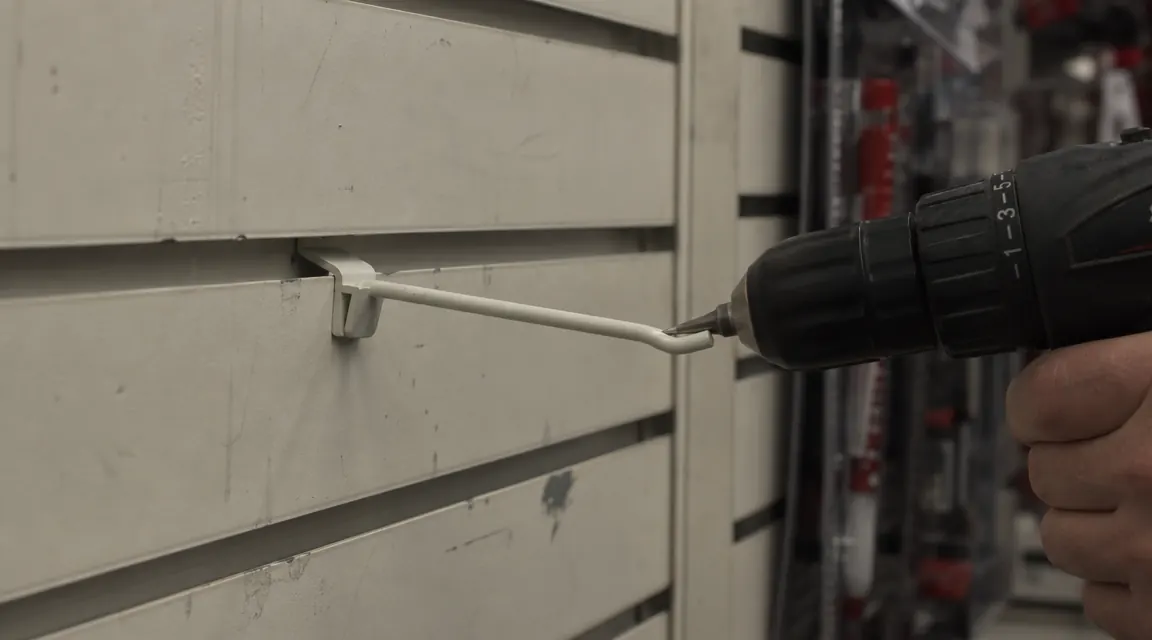
I mounted slatwall panels in my first rental house. Three full MDF-core panels with aluminum groove inserts, the kind that looked properly industrial at the store. They looked sharp for about four months. Then a mid-size cordless drill in a hook holder started pulling the groove lip forward, the aluminum insert slipped, and at 11 p.m. the whole hook came out with a clatter loud enough to wake up the neighbor's dog. I patched the wall, switched to Wall Control pegboard, and I have not had a single hook fall since. That was close to three years ago. The pegboard is still up, still holding the same load.
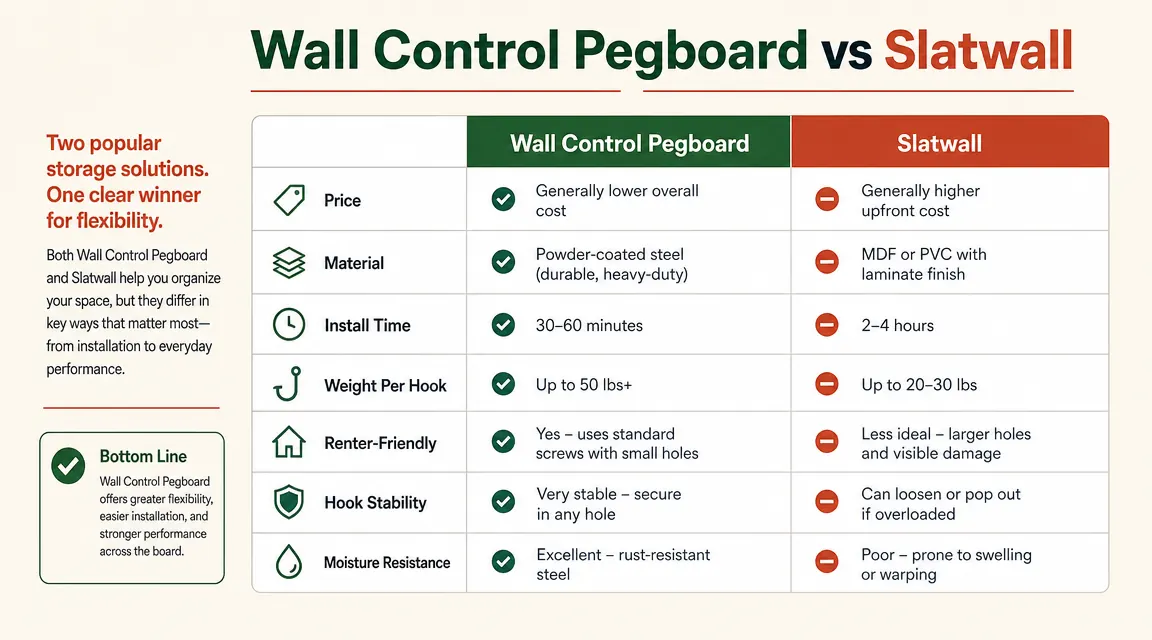
| Wall Control Metal Pegboard | Slatwall Panels (MDF or PVC core) | |
|---|---|---|
| Entry price (4 ft. coverage) | Mid-range with accessory starter kit included | Panels only; hooks and bins sold separately |
| Core material | 18-gauge powder-coated steel | MDF (common budget option) or PVC (better; costs more) |
| Install method | Screws flat into studs or drywall anchors; no spacers required | Screws into studs across full panel width; full-run leveling required |
| Weight per hook point | Up to 50 lbs per hook; full panel rated 100 lbs | Groove-dependent; MDF core deforms under sustained heavy load |
| Hook stability | Hooks lock into slots; zero lateral slide | Friction-fit in groove; hooks migrate sideways with vibration and regular use |
| Moisture and humidity | Powder-coated steel; handles unheated garage through all seasons | MDF swells noticeably in humid garages; PVC holds but costs more |
| Renter-friendly | 4 screws per 2x4 ft. panel section; easy spackling on move-out | More fastener points across panel run; harder to patch cleanly |
| Hook and accessory compatibility | Wall Control proprietary hooks plus standard 1/4-in. pegboard adapters | Slatwall-specific hooks only; no cross-compatibility with pegboard hardware |
| Best fit | Home garage, shop, utility room tool wall | Retail display, client-facing showroom, commercial merchandising wall |
Where Wall Control Wins
The single biggest thing Wall Control gets right is hook stability. Every hook on a Wall Control panel sits inside a slot and physically locks. That sounds minor until you've spent real time with a system where hooks migrate every time you pull a tool off the wall. With standard pegboard hooks you end up pushing them back into position constantly. With slatwall, the groove friction loosens over months of regular use, and once a heavy item starts tilting the hook forward, it only gets worse. Wall Control hooks do not move unless you deliberately choose to move them, which means your layout stays exactly where you put it.
Material is the second win. The panels are 18-gauge steel. They don't warp, don't absorb moisture, and don't care if a 7-pound ratchet set has been hanging in the same spot for two years straight. I've had my panels through two Pacific Northwest winters with the garage door open most weekends, temperatures cycling from 28 degrees to 85. The powder coat shows zero signs of rust or flaking. The 4 ft. kit comes with a starter accessory set, so you're not hunting for compatible hooks on a separate order. For the full picture of what's in the box and how the install actually goes, the long-term Wall Control review covers every detail.
Install speed is the third advantage people underestimate. A Wall Control panel goes flat against the wall and screws directly into studs. No perimeter framing, no standoff spacers, no requirement to get every panel perfectly level before you move on. I did my 4 ft. section in about forty minutes including stud-finding time. Slatwall installation requires you to run the full panel width level across a wall with multiple fastener points per panel, and any alignment error at the first row compounds through every row above it. If you're doing a Saturday project with one or two stolen hours between other things, that time difference matters more than the spec sheet suggests.
Your garage hooks shouldn't fall off the wall when you grab a drill at midnight
The Wall Control 4 ft. Metal Pegboard Standard Kit includes panels and a starter set of hooks. No groove creep, no wobble, and no late-night clatters. Nearly 6,000 reviewers at 4.7 stars.
Amazon Check Today's Price on Amazon →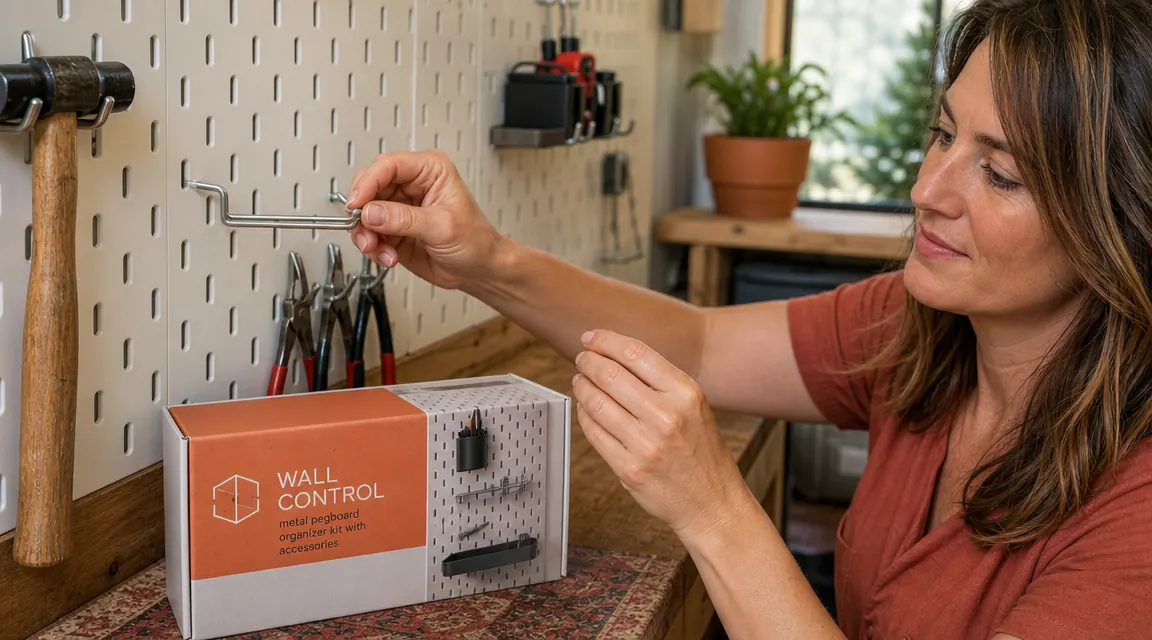
Where Slatwall Wins
Slatwall holds its own in one specific context: retail-style display where items need to face outward, be visible at a distance, and look consistent across a large wall surface. If you're outfitting a workshop you want to show clients, or a garage that doubles as a small business showroom, slatwall's clean horizontal groove lines read more polished than a grid of holes. The commercial accessory supply chain for slatwall is also enormous: specialty holders for odd-shaped tools, angled display arms, sign holders, and branded fixtures are all readily available from retail display suppliers at a scale the Wall Control ecosystem doesn't match.
PVC-core slatwall also outperforms MDF in sustained humidity, and it has a real edge over powder-coated steel in environments with salt air or serious standing-water issues, such as a coastal garage with drainage problems. In that narrow scenario, a quality PVC-core slatwall panel with sealed edges will outlast steel over fifteen or more years. The tradeoff is cost: once you're buying PVC-core panels plus aluminum insert channel kits plus compatible hooks, you've typically spent more than a Wall Control kit and you still don't have locking hooks.
The grooves look industrial-solid in the store. What you don't discover until a heavy drill has been hanging in the same spot for a month is how far the aluminum insert has actually shifted.
The Real Cost of Each System Over Three Years
The headline prices make slatwall look competitive, but the full cost tells a different story. A Wall Control 4 ft. kit is competitively priced and includes panels plus a starter hook set. A comparable slatwall setup for the same wall area, with panels, aluminum inserts, and a basic set of compatible hooks, often runs noticeably higher before you've bought anything heavy-duty. The slatwall hook ecosystem prices individual accessories noticeably higher than Wall Control equivalents, and since the two systems share zero compatibility, there's no mixing them if you change your mind later.
Over three years, Wall Control also wins on replacement cost. I have not replaced a single hook or panel on my current setup. The slatwall system I ran for four months needed two replacement hooks and one replacement aluminum insert channel before I gave up on it. Small costs individually, but they add up and they signal a system built around ongoing maintenance rather than set-once organization. When I'm organizing in stolen pockets of time, I don't have budget for a system that needs babysitting.
The Accessory Question: How Locked In Are You?
Both systems use proprietary accessories, so it's worth thinking about ecosystem lock-in before you mount anything. Wall Control's proprietary hooks are not interchangeable with standard pegboard hooks at the slot level, though Wall Control does sell an adapter that accepts 1/4-in. standard pegboard hooks if you have a collection you want to use. That gives you some flexibility. Slatwall accessories have no such bridge to pegboard hardware at all. The groove profile is a completely different geometry, so if you switch systems later, every hook, bin, and holder you bought goes with it.
In practice, Wall Control's proprietary hook line is deep enough that most home garage users never need to leave the ecosystem. There are hooks for every wrench size, dedicated pliers holders, screwdriver rails, bin attachments for small parts like drill bits and screws, shelves rated for heavy power tools, and cord management hooks for extension cords and charging cables. The accessory cost adds up fast if you're kitting out a large wall from scratch, but the pieces are purpose-built for the panel and they stay where you put them. That consistency is what keeps people in the system for years.
What I'd Do If I Were Starting Over
I'd buy Wall Control again without hesitation. The main thing I'd do differently is start with the 4 ft. standard kit and resist adding accessories immediately. The kit hooks cover most tools. Spend a few weeks actually using the system before you order more accessories, because how you reach for tools in your specific garage workflow will tell you exactly which specialty holders are worth buying and which ones you'll never use. I wasted money on a few slatwall accessories because I bought them before I understood my own habits.
The one thing I'd tell someone on the fence: don't let the slatwall price fool you. The panel price looks similar or cheaper. The total project cost, counting all the accessories you need to make it functional for tool storage, is higher. And you still end up with a system that requires ongoing hook adjustments. For a home garage, Wall Control is the less expensive, more durable, and significantly less aggravating choice.
Who Should Buy Which
Buy Wall Control if your goal is a working tool wall in a home garage, shop, or utility room. You're storing hand tools, power tools, cords, and safety gear, anything with real weight, and you want hooks that stay put every time. The kit format removes the accessory puzzle on day one. Install is a genuine one-person Saturday morning job. If you're planning a full garage zone layout and want to know how to arrange hooks for actual workflow, the garage tool organization guide covers the zone approach that works best with Wall Control's system.
Buy slatwall if you're outfitting a commercial display space, you need the look of horizontal groove lines for a client-facing shop, or you already own a large collection of slatwall accessories you want to reuse. If you're considering slatwall for a home garage because it looked sturdy at the home improvement store, reconsider. The MDF core is not built for variable-humidity garage environments. If you're committed to slatwall regardless, budget for PVC core with full aluminum groove channel kits and accept that it's a bigger project.
For renters specifically, Wall Control is the cleaner exit. A 2x4 ft. panel section uses four screws. A tube of spackling and five minutes of work gets you move-out ready. I've rented with both systems and the pegboard removal was genuinely nothing. The slatwall removal took the better part of an hour per panel section and required more visible patching. If your garage wall is drywall and you're on a lease, that exit difference is worth factoring in before you commit to either system.
Stop reorganizing hooks that won't stay where you put them. Mount once, done.
Wall Control's 18-gauge steel panels hold heavy tools without warping, swelling, or losing their grip. The kit includes everything you need to start the first weekend.
Amazon Check Today's Price on Amazon →