
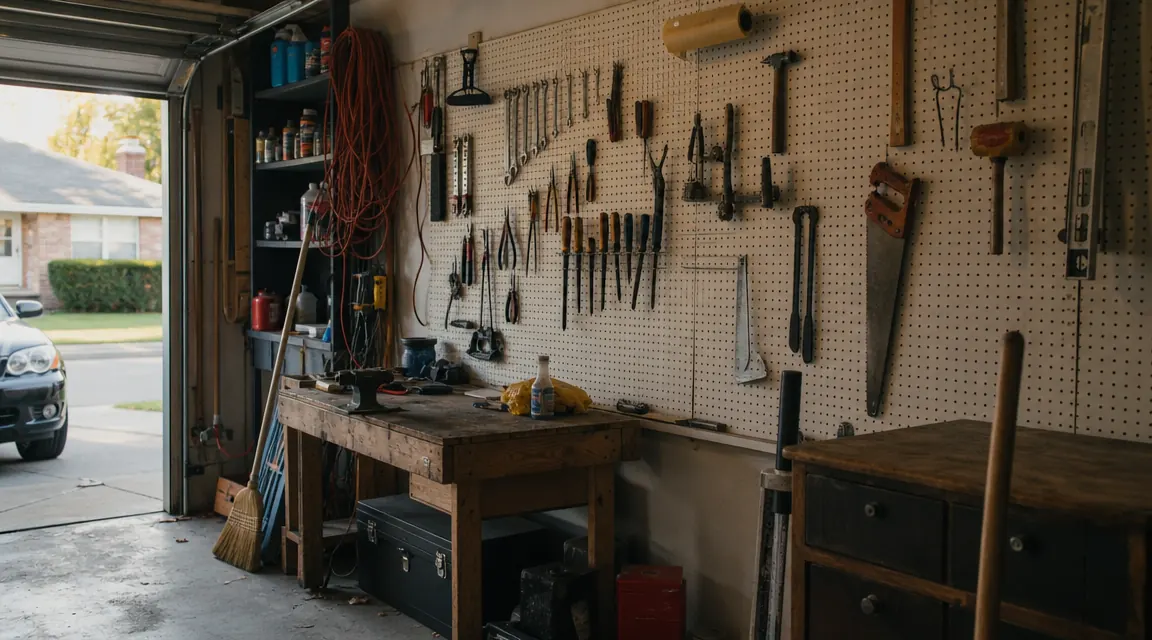
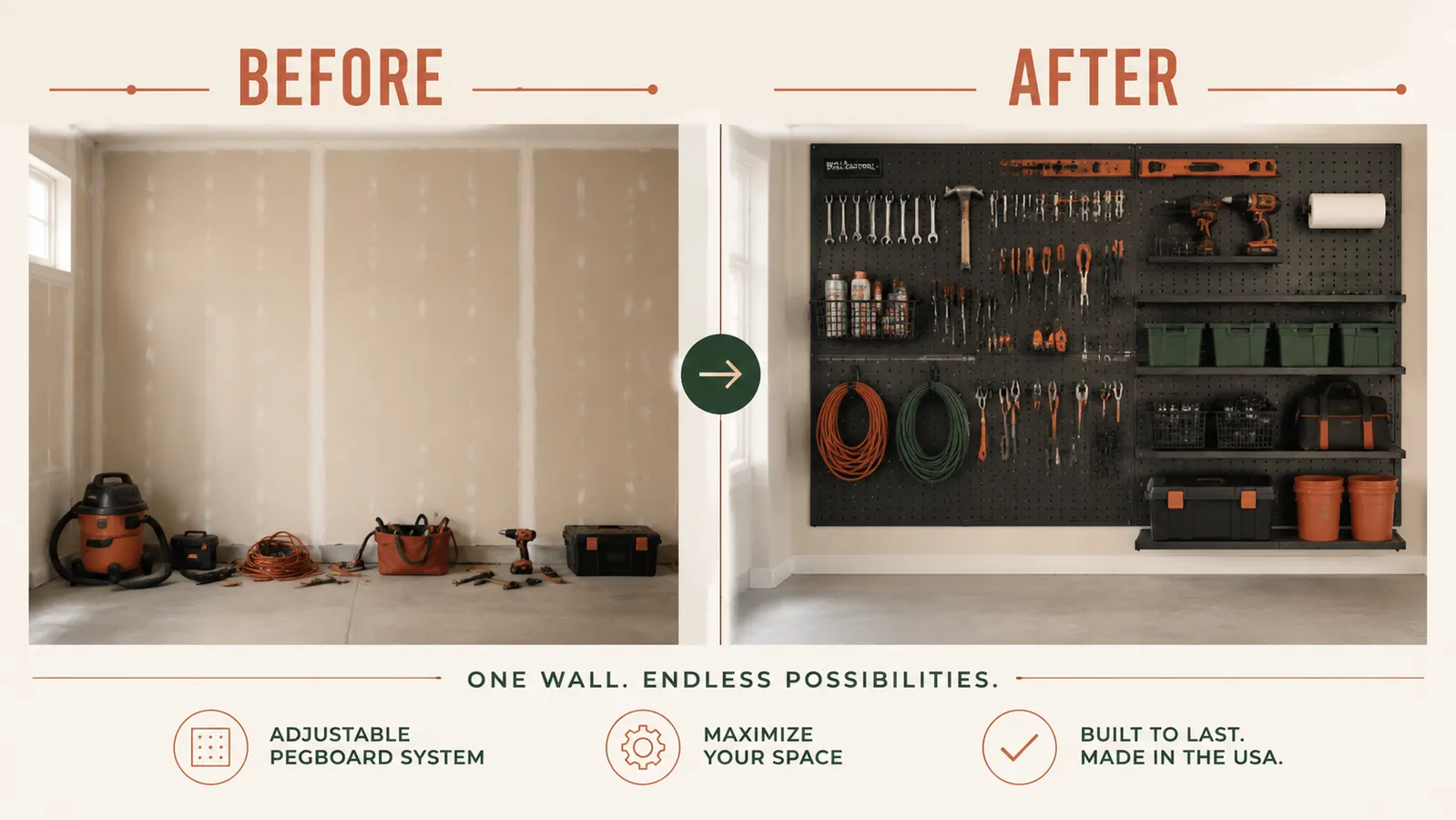
Three years ago I had forty-seven tools in various states of being lost. Two hammers were on the garage floor. My ratchet set was somewhere in a cardboard box I had not opened since the move. A cordless drill was balanced on a shelf between a can of spray paint and a bag of potting soil. I had twelve feet of bare drywall staring at me every time I opened the garage door, and I was spending fifteen minutes looking for basic things I owned.
I bought the Wall Control 4-foot metal pegboard kit in March of 2021. It went up on that bare wall the same weekend. I am writing this in 2024, which means I have had three winters, one garage reorganization, one new tool collection buildout, and somewhere around a thousand trips in and out of that garage to test my opinion on this thing. Here is what I actually think.
The Quick Verdict
The most solid tool-storage pegboard I have ever used. Heavy enough to feel permanent, flexible enough to rearrange in ten minutes. The accessories cost more than they should, and the install manual needs a rewrite, but three years in, nothing has moved.
Amazon Check Today's Price →Still hunting for your tools every single time? This panel ends that.
The Wall Control 4 ft. metal pegboard kit includes the panels, mounting hardware, and a starter set of hooks and bins. Everything in one box, one afternoon on the wall.
Amazon Check Today's Price on Amazon →How I Have Used It
My garage is a single-car space, roughly 20 feet by 20 feet. There is one wall that runs 12 feet across the back, and that is where the pegboard lives. The kit I bought covers 4 feet wide by 32 inches tall. I mounted it myself on a Saturday morning with a stud finder, a drill, and about ninety minutes of actual work. The panels bolt directly into the studs through the metal flanges on the panel edges, so there is no separate French cleat, no backer board, nothing hidden in the wall.
My tools are not light. I have a full set of Tekton wrenches, two cordless drills, a circular saw, a jigsaw, two levels, a full socket set, multiple hammers, a collection of screwdrivers, and a row of hand saws. On a normal week that wall gets touched every two or three days. Rearranging happens a few times a year when I add a new tool or change how I work in the space.
I do not baby this system. I grab things fast, I hang things without finesse, and I have knocked tools off the hooks twice by bumping the wall with a ladder. The hooks are still in place. The panels have not flexed. That matters more than any spec sheet.

The Steel Panels: What Makes Wall Control Different
Standard pegboard is fiberboard with 1/4-inch holes. You have used it. The holes strip. The whole sheet sags if you load it with anything heavier than a trowel. I had a 4-by-8 sheet of standard pegboard in my previous house and after eighteen months it was bowed in the middle and I had stopped trusting it with anything important.
Wall Control panels are 26-gauge cold-rolled steel. The slot pattern is horizontal, which means hooks slide in along a row instead of poking into individual holes. You get a full 4-foot wall of half-inch slots that you can load at any point. When you want to move a hook, you do not have to figure out which hole lines up. You just slide it over. I rearranged my whole wrench row in about eight minutes last spring without removing anything from the wall first.
The panels come in white or galvanized silver. I have the white. After three winters of temperature swings in an uninsulated garage (Houston, so that means anything from 28 degrees in January to 105 degrees in August), the finish has held. There is one small scuff where a socket set slipped during a hang, but it took me a minute to find it for this review. No rust, no peeling, no discoloration.
The Accessories: Where the Cost Adds Up
The kit comes with a starter set of hooks and a couple of small bins. That gets you started, but you will want more. This is where I have to be honest about the math. Wall Control accessories are not cheap. The locking hooks, which are the real reason people buy this over standard pegboard, run in the mid range for a two-pack depending on size. A set of shelves and bins adds considerably to the panel cost.
Over three years I have spent probably eighty additional dollars on accessories beyond the base kit. That is a real number. If budget is tight, you can use the standard hooks that come in the kit for a while, but those do not lock in place the way the premium locking hooks do. The locking hooks are worth the extra cost for heavy tools. For lighter stuff like extension cords or tape measures, the standard hooks are fine.
One thing worth knowing: Wall Control accessories only work on Wall Control panels. The slot pattern is proprietary. If you buy a competitor's hooks and try to use them here, they will not engage properly. That is a deliberate lock-in. It bothers some people more than others. I knew going in, so I planned my spend accordingly.
I rearranged my entire wrench row in eight minutes without removing a single tool from the wall first. That is the actual difference between steel slots and fiberboard holes.
Performance Over Three Years: What Held, What Surprised Me
The panels themselves have been essentially maintenance-free. I wiped them down once in year two with a damp cloth, which is the full extent of my upkeep. The mounting screws are still tight. I gave the whole panel a pull test about six months ago, just to check, and it did not budge. The flanged mounting design distributes load across the studs in a way that feels engineered rather than cobbled.
The one surprise came in year one: I loaded the top row of hooks with a full set of pipe wrenches, which are heavy and unevenly shaped. Two standard hooks (not the locking ones) walked slowly toward each other over about two months because of the lateral weight bias. Once I swapped those two hooks for locking versions, the problem stopped. It was a ten-minute fix, but it is worth knowing if you plan to hang anything over a few pounds on standard hooks.
I have also noticed that the horizontal slot pattern makes it easy to accidentally leave a hook slightly misaligned if you move it quickly. It sits in the slot but is not fully locked in. That is user error, not a product flaw, but I mention it because I have grabbed tools off the wall in a hurry and felt a hook shift slightly before settling. Get in the habit of pressing the hook fully into the slot after every move and you will not have this issue.
The Install: What the Manual Gets Wrong
The panels mount through the flanged edges directly into studs. My studs are 16 inches on center, which matched the panel width perfectly. If your studs are 24 inches on center you will need to use the included drywall anchors for the middle mounting points, which adds about twenty minutes and a small amount of stress to the install.
The instruction sheet is sparse. It tells you where the screws go but does not give you a good picture of how the panels interlock if you are mounting multiple units side by side. I watched two different YouTube videos to understand how the edge flanges align before I felt confident. Wall Control's own video on their website is better than the paper manual, and I would go there first before trying to parse the printed diagram.
If you are mounting on drywall only, without hitting studs, I would not do it with heavy tools. The panels are designed for stud mounting. The drywall anchors in the kit are fine for a lighter load, but I would not trust them with a full socket set and two drills. Find your studs.
What I Liked
- 26-gauge steel panels hold heavy tools without flexing or bowing after three years
- Horizontal slot system lets you reposition hooks without removing anything from the wall first
- Locking hooks keep heavy tools exactly where you put them even if you knock the wall
- Powder-coat finish survived three Houston winters in an uninsulated garage with no rust or peeling
- Panels bolt directly into studs, no backer board or French cleat required
Where It Falls Short
- Accessories are proprietary and not cheap; budget another moderate amount over time
- Standard (non-locking) hooks can walk slowly under heavy lateral loads
- Install manual is thin; you will want to watch a video before mounting
- Only works with Wall Control brand accessories, so you are locked into one ecosystem
- Two-panel 4-foot kit does not come with enough hooks to fill the wall out of the box

Who This Is For
This system is for anyone who owns real tools and uses them. If you have a half-dozen screwdrivers and a hammer, a ten-dollar fiberboard pegboard from the hardware store will handle your life fine. But if you have grown a tool collection over years, if you are reaching for a specific wrench multiple times a week, if you have ever spent twenty minutes finding something you own, the Wall Control system pays for itself in aggravation alone. It is especially good for garages that serve double duty as workshops, because you can rearrange the wall in minutes when a project requires a different layout without pulling everything down.
Who Should Skip It
Skip it if you are renting and cannot drill into walls. This is a permanent install that requires hitting studs. Skip it if you want to spend the minimum and just need somewhere to hang a garden hose and a few rakes. The price, plus the ongoing accessory cost, is only worth it if you are building a real tool wall. Also skip it if you need to cover more than about 12 linear feet on a budget. Covering a full wall in Wall Control panels adds up fast. In that case, a mix of Wall Control for your most-used tools and a simpler shelf system for bulk storage might be the smarter split.
Three years, zero regrets. If your tools are still on the floor, here is the wall you've been putting off.
The Wall Control 4 ft. metal pegboard kit is a one-afternoon install that turns a bare wall into a fully loaded tool station. Check current availability and today's price on Amazon.
Amazon Check Today's Price on Amazon →