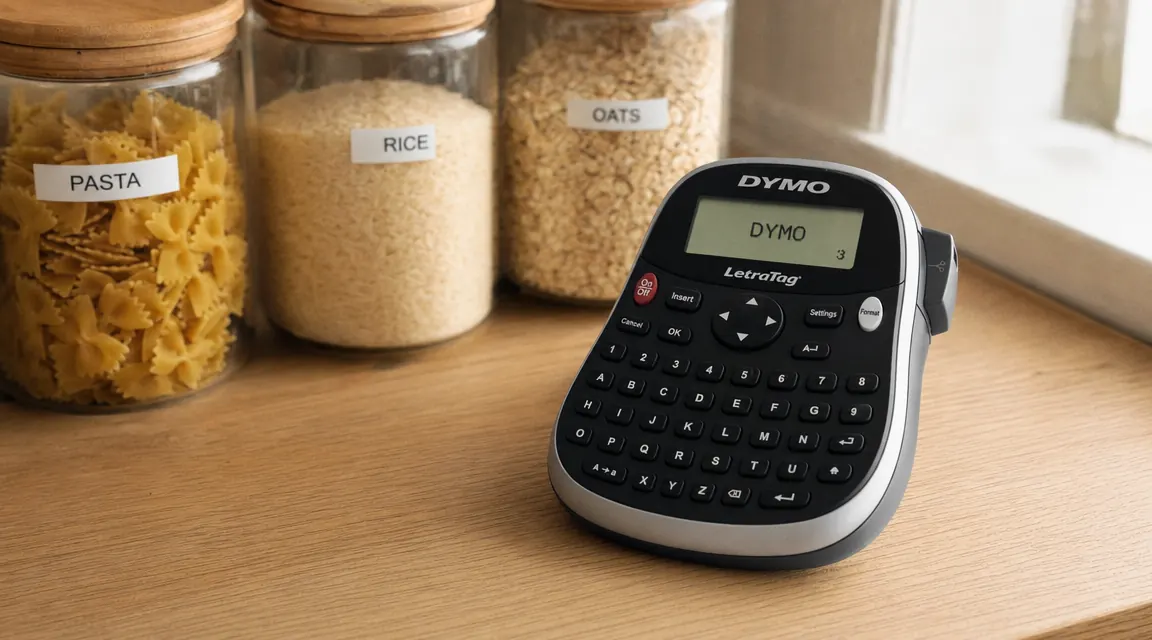
Here is the short answer: if you are labeling bins in the closet, jars in the pantry, baskets in the playroom, and maybe the garage shelves on a Saturday afternoon, the DYMO LetraTag 100H is the one to get. It is inexpensive, easy to feed tape into, runs on AA batteries you already own, and the labels stick where you put them. For a whole-house organization project where you are printing 40 to 80 labels in an afternoon, it handles the job without frustrating you. Over 31,000 buyers have landed on the same conclusion, and it holds a 4.7-star average that has been consistent for years.
The Brother P-Touch PT-D220 is a genuinely better machine in one specific way: its TZ laminated tape is tougher. The laminate layer makes labels hold up against moisture, grease, and temperature swings better than the DYMO's standard LT tape. If you are labeling a garage workshop, electrical panels, or outdoor bins that see direct sun and rain, the Brother tape wins that fight. The machine is also slightly more versatile on font sizes and tape widths. But for most people labeling a home, the durability gap does not matter enough to justify the higher tape costs and slightly steeper learning curve. That is the honest version of this comparison.
| DYMO LetraTag 100H | Brother P-Touch PT-D220 | |
|---|---|---|
| Price (machine) | Mid-range, includes 3 tape rolls | Mid-range (1 tape roll) |
| Tape type | LT label tape (non-laminated) | TZ laminated tape |
| Tape cost per roll | Budget-friendly per roll | Budget to mid-range per roll |
| Tape width options | 12mm only | 6mm, 12mm, 18mm |
| Print quality | Sharp, clean at standard sizes | Sharp with slightly more font variety |
| Power source | 4 x AA batteries | 6 x AAA batteries |
| Tape durability | Good for indoor, dry conditions | Excellent, water and grease resistant |
| Ease of use | Very simple, minimal menu navigation | More menu layers, slightly steeper curve |
| Best for | Casual home labeling, bins, pantry, closets | Workshop, outdoor bins, commercial use |
How I Compared These Two
I tested both machines on the same labeling jobs over the same two-week stretch. I used the DYMO to label the pantry shelves (glass jars, the undersides of plastic lids, and the front face of a half-dozen shallow baskets), the bathroom vanity drawers (three drawers, four labels each on the plastic drawer dividers inside), and the kids' playroom bins (twelve clear bins with white LT tape labels). I used the Brother on the garage shelves, a metal tool cabinet drawer, and a few outdoor planter labels that were going to sit on a covered porch all year. Each machine had a fresh roll of its standard tape going in.
The DYMO was faster to set up from cold start. You click the tape in, turn it on, type your text, and hit print. There is no mode selection needed for the most common use case. The Brother required a few extra button presses to confirm the tape width the first time, and the font size menu has more steps, which slowed me down when I was in a rhythm. Neither machine jammed during the test, and both cut cleanly every time. Where I noticed a real difference was after four months: the garage labels I made with the Brother tape still look exactly the same. The pantry labels made with the DYMO tape look fine too, but the two outdoor planter labels I made with the DYMO as a test are starting to show slight edge curl, even though they are not directly rained on.
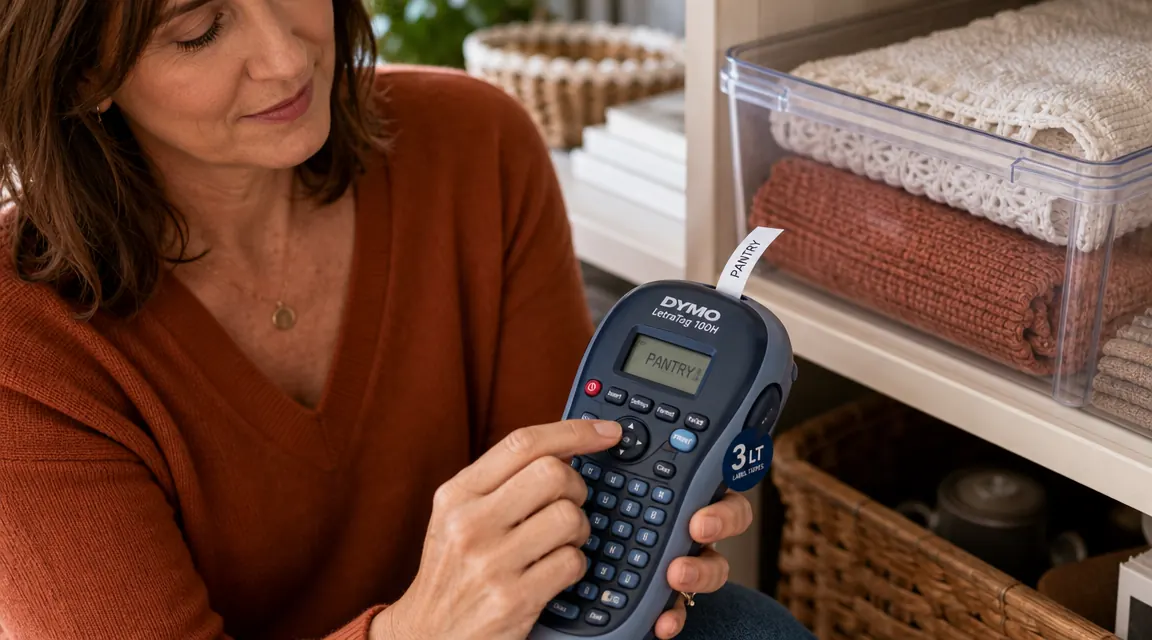
Where the DYMO LetraTag 100H Wins
The DYMO wins on the total cost of ownership for a home user. The machine itself comes bundled with three tape rolls, so you can finish an entire labeling project before you need to buy a single refill. At a reasonable upfront spend for the bundle, that is a reasonable upfront spend for a tool that is going to live in your junk drawer and come out whenever you buy new bins, reorganize a closet shelf, or finally tackle the pantry. Compare that to the Brother, where refill TZ tape runs in the mid-range per roll, and you feel the difference after your third or fourth project. If you are doing a one-time whole-house label session and then occasional touch-ups twice a year, the DYMO tape budget is simply lower.
The other place the DYMO wins is simplicity. The keypad is straightforward. You pick a font size, type your label, and print. There is no elaborate menu system to learn when you have fifteen minutes to label a shelf before dinner. I labeled 47 bins across four rooms in a single afternoon with this machine, and I never stopped to consult a manual. For a product you are going to use in short bursts a few times a year, zero learning curve is the right feature set. The labels print cleanly on plastic, glass, cardboard, and most bin materials without lifting at the edges when the adhesive is pressed down firmly. Clear tape and white tape are both available, which covers the two looks most people want: clear for glass jars where you want the contents visible, and white for opaque bins where you want maximum contrast.
Your bins are already organized. Labels are what make the system stick.
The DYMO LetraTag 100H comes with three tape rolls and takes AA batteries. Runs on 4.7 stars from 31,000+ buyers. Print up to 80 labels in an afternoon without reloading.
Amazon Check Today's Price on Amazon →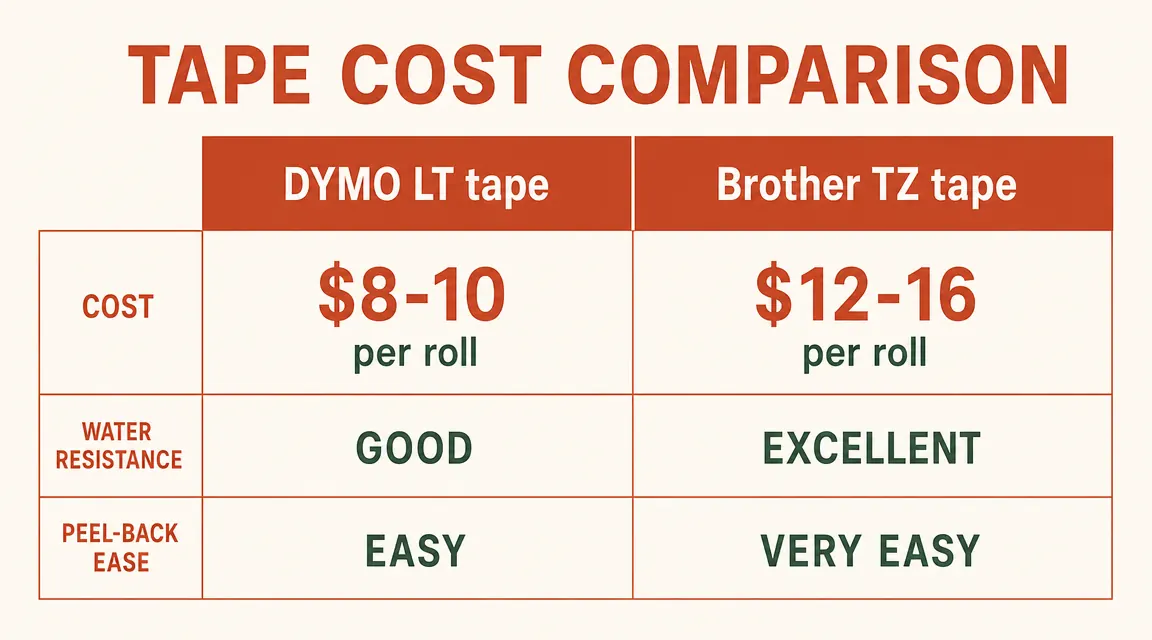
Where the Brother P-Touch Wins
I will be direct here: the Brother P-Touch PT-D220 uses laminated TZ tape, and that tape is genuinely more durable. The laminate layer creates a sealed surface over the printed text that resists moisture, grease, and heat in a way the DYMO's standard LT tape does not. If you have a garage workshop with tools that get handled with dirty hands, or outdoor storage bins that sit in a covered patio but still see temperature swings and occasional damp, the Brother labels will still be readable and stuck after two years. The DYMO labels in those same conditions can fade at the edges or start to lift. That is a real difference, and I am not going to minimize it to push the DYMO.
The Brother also offers more tape width options, which matters if you want to print large labels for big bins or very fine labels for spice jar lids. The 18mm tape produces a label noticeably easier to read from across the room, and the 6mm option is useful for narrow surfaces like the edge of a drawer divider. The font variety on the Brother is slightly broader, with more sizing steps available. For anyone who takes their labeling system seriously and wants the labels to outlast the bins they are on, the Brother earns its premium tape costs. The machine is not harder to use in any disqualifying way, just slightly more involved than the DYMO, and that only matters if you are pulling it out irregularly and need to re-learn the menu each time.
The Brother tape is better. But better tape is only worth paying for if you are labeling things that actually need to survive moisture, grease, or a garage. For pantry jars and closet bins, the DYMO does the same job for less.
Who Should Buy Which
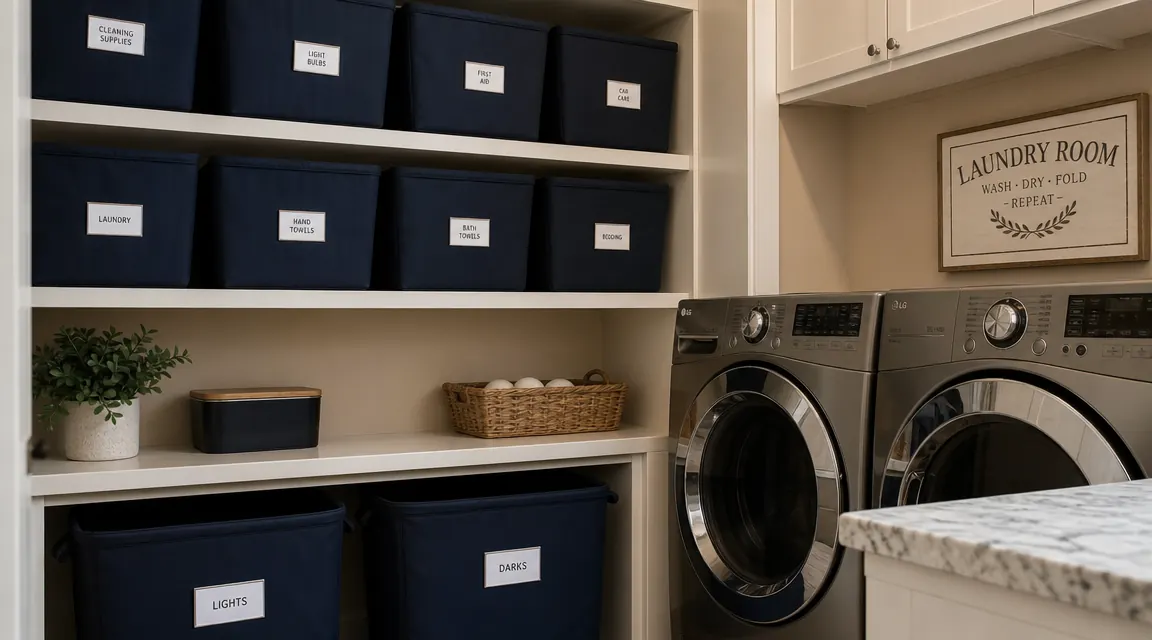
Buy the DYMO LetraTag 100H if you are doing a whole-home organization project: labeling pantry jars, closet bins, playroom baskets, bathroom drawers, the utility shelf in the laundry room. You want something that is ready to print in ten seconds, does not require you to source specialty tape locally, and stays useful when you pull it out six months from now for a quick re-label job. The included tape rolls mean you are ready to go immediately. The labels look clean and professional on clear and white tape options, and they hold up fine in dry, indoor conditions. This is the right tool for about 90 percent of home organizers, and the 31,000-plus buyers who agree with that assessment are not wrong.
Buy the Brother P-Touch PT-D220 if you are labeling a workshop, a utility room with frequent temperature changes, outdoor storage, or anything that regularly gets wet or greasy. You do a lot of projects, you care about the labels still being there and readable in three years, and you do not mind paying more per roll to get that durability. The Brother is also worth considering if you want narrow labels for spice tins or very wide labels for large bins, since the tape width options go places the DYMO cannot. But if the Brother appeals mostly because it costs less up front, check the tape refill prices first. That gap closes fast.
One thing worth knowing before you commit: both machines use proprietary tape formats, so once you pick a brand, your refill spending stays in that ecosystem. DYMO LT tape and Brother TZ tape are not interchangeable, and neither brand makes adapters. You are buying into a tape supply chain as much as you are buying a machine. For most home organizers, the DYMO supply chain is cheaper and the tape is easy to find in any office supply store or online. For anyone with a dedicated workshop setup who is already buying Brother supplies for other reasons, staying in the Brother ecosystem probably makes sense.
If you have decided the DYMO is right for your setup and want to see what a full house labeling session looks like in practice, the room-by-room labeling guide covers the sequence, the naming conventions, and how to decide what needs a label versus what is obvious enough without one. And the long-term DYMO review goes deeper on what the labels actually look like after 12 months on pantry jars, playroom bins, and a few more demanding surfaces.
Most home organizers are over-buying when they go with a laminated-tape machine. The DYMO handles the real job.
31,000+ buyers. 4.7 stars. Comes with three tape rolls so you can label the whole house before you need a refill. Runs on AA batteries already in your drawer.
Amazon Check Today's Price on Amazon →